
Seaweed Mariculture: Scope And Potential In India

Error message

  • Warning: ini_set(): Headers already sent. You cannot change the session module's ini settings at this time in drupal_environment_initialize() (line 695 of /home4/tassusac/public_html/marineagronomy/includes/bootstrap.inc).
  • Warning: ini_set(): Headers already sent. You cannot change the session module's ini settings at this time in drupal_environment_initialize() (line 696 of /home4/tassusac/public_html/marineagronomy/includes/bootstrap.inc).
  • Warning: ini_set(): Headers already sent. You cannot change the session module's ini settings at this time in drupal_environment_initialize() (line 697 of /home4/tassusac/public_html/marineagronomy/includes/bootstrap.inc).
  • Warning: ini_set(): Headers already sent. You cannot change the session module's ini settings at this time in drupal_environment_initialize() (line 700 of /home4/tassusac/public_html/marineagronomy/includes/bootstrap.inc).
  • Warning: ini_set(): Headers already sent. You cannot change the session module's ini settings at this time in drupal_environment_initialize() (line 702 of /home4/tassusac/public_html/marineagronomy/includes/bootstrap.inc).
Abstract: 

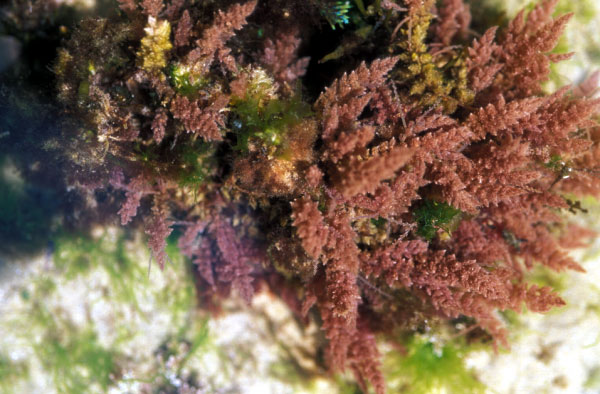
Seaweeds are macrophytic algae, aprimitive type of plants lacking trueroots, stems and leaves. Mostseaweeds belong to one of threedivisions - the Chlorophyta (greenalgae), the Phaeophyta (brown algae)and the Rhodophyta (red algae). Thereare about 900 species of greenseaweed, 4000 red species and 1500brown species found in nature1. Thegreatest variety of red seaweeds isfound in subtropical and tropicalwaters, while brown seaweeds are morecommon in cooler, temperate waters.

Author(s): 
S. B. Satam
Sajid I. Khan
Category: 
Basic Biology
Seaweed composition