
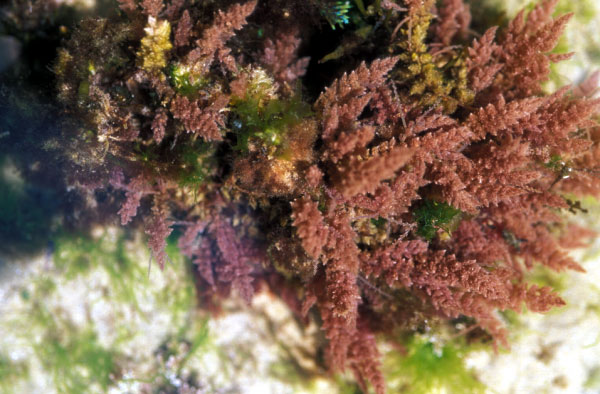
KELP AND CARBON SEQUESTRATION: EXPORTING TERRESTRIAL GHG ACCOUNTING TO THE DEEP SEA

Error message

  • Warning: ini_set(): Headers already sent. You cannot change the session module's ini settings at this time in drupal_environment_initialize() (line 695 of /home4/tassusac/public_html/marineagronomy/includes/bootstrap.inc).
  • Warning: ini_set(): Headers already sent. You cannot change the session module's ini settings at this time in drupal_environment_initialize() (line 696 of /home4/tassusac/public_html/marineagronomy/includes/bootstrap.inc).
  • Warning: ini_set(): Headers already sent. You cannot change the session module's ini settings at this time in drupal_environment_initialize() (line 697 of /home4/tassusac/public_html/marineagronomy/includes/bootstrap.inc).
  • Warning: ini_set(): Headers already sent. You cannot change the session module's ini settings at this time in drupal_environment_initialize() (line 700 of /home4/tassusac/public_html/marineagronomy/includes/bootstrap.inc).
  • Warning: ini_set(): Headers already sent. You cannot change the session module's ini settings at this time in drupal_environment_initialize() (line 702 of /home4/tassusac/public_html/marineagronomy/includes/bootstrap.inc).
Abstract: 

Recent breakthroughs have elevated algae as a promising biological solution to environmental challenges. Particular species of algae can provide low-impact, non-fossil substitutes for liquid fuel and plastics and can decrease enteric fermentation emissions from cattle. Now, a recent Nature Geoscience paper quantifies the role of kelp and other macroalgae in the global carbon cycle. The peculiarities of seaweed carbon cycling may skirt “permanence” issues that have plagued other biological carbon sinks, such as terrestrial forests. Future research may enable business and government to recruit kelp forest rehabilitation as an additional approach to climate change mitigation.


Author(s): 
PATRICK CAGE
Article Source: 
GHG management institute
Category: 
Ecological Services
Engineering
Seaweed composition