
Nutritional composition of edible Hawaiian seaweeds
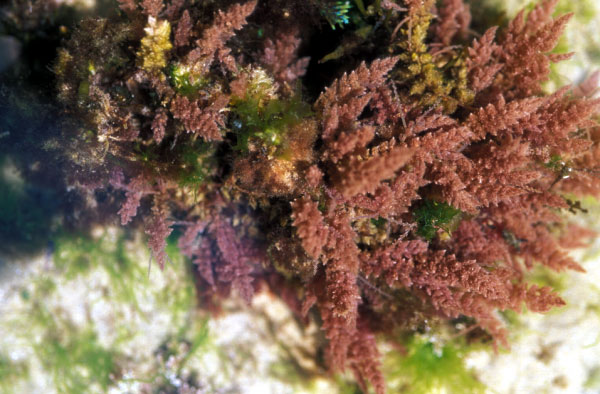
Fresh seaweeds, both wild and cultivated, are commonly eaten as food in the Hawaiian Islands. Before Western contact, limu (seaweed) was a regular part of the diet, and is thought to have contributed vitamins and essential mineral nutrients not found in other staple food items. Twenty-two species of edible Hawaiian macroalgae (6 Chlorophyta, 4 Phaeophyta, 12 Rhodophyta) were analyzed for protein, lipid, carbohydrate, ash, caloric, mineral and vitamin content.
Halymenia formosa and Porphyra vietnamensis ranked highest in total protein content among the species analyzed.Most species contained less than 5%crude lipid, although two Dictyota species had over 16% crude lipid based on dry weight. Soluble carbohydrates ranged from 4.5 to 39.9% dry weight. Ash values ranged from 22.4% to 64.2%. Dictyota sandvicensis and Monostroma oxyspermum had caloric content each over 3000 cal g−1 ash-free dry weight. All species contained measurable quantities of 11 essential mineral elements. The majority of Hawaiian seaweeds tested contained β-carotene (vitamin A), and Enteromorpha flexuosa contained the highest amount of vitamin C (3 mg g−1).



Marine Agronomy Group, CAFNRM, UH-Hilo
200 W. Kawili st., HI 96720, USA
Contact: Marine.Agronomy.Group@gmail.com
Funding for this web portal is provided by the World Wildlife Fund and the University of Hawaii-Hilo.