
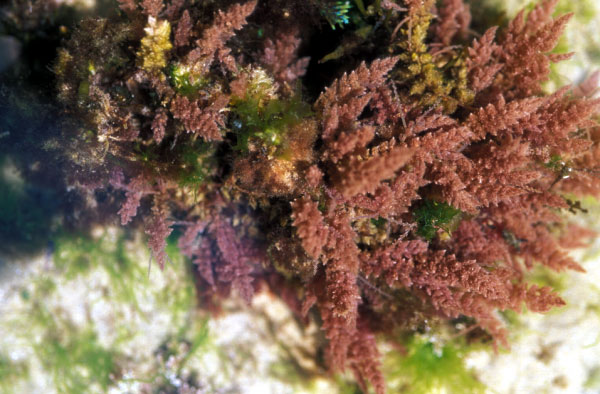
Researchers lay groundwork for emerging US seaweed industry
Cultivation of seaweed in the US faces big barriers: the lack of commercial-scale processing, competition with lower-cost Asian imports, inconsistent oversight, and increasing food safety concerns, say farmers and researchers.
These problems are preventing farmers from harnessing seaweed’s full potential.
“Seaweed globally is upwards of a $12-billion industry, just growing and wild harvesting it, whether for cosmetics, filler for food or for human consumption. We are really in a good situation here in North America to provide the best seaweed in terms of nutrient and health value to the rest of the world due to our water-quality regulations. But we are so far behind in terms of growing in the oceans and aquaculture,” says Greg Martino, co-owner of Cottage City Oysters on Martha’s Vineyard.



Marine Agronomy Group, CAFNRM, UH-Hilo
200 W. Kawili st., HI 96720, USA
Contact: Marine.Agronomy.Group@gmail.com
Funding for this web portal is provided by the World Wildlife Fund and the University of Hawaii-Hilo.