
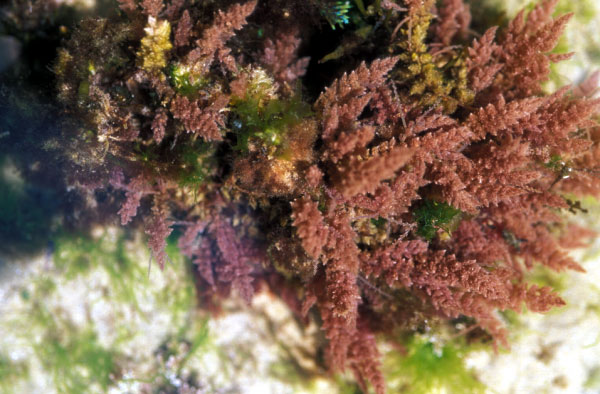
Life cycle assessment of macroalgae cultivation and processing for biofuel production
There has been a recent resurgence in research investigating bioenergy production from algal biomass due to the potential environmental benefits in comparison to conventional bioenergy crops and conventional fossil fuels. This life cycle assessment (LCA) considered the energy return and environmental impacts of the cultivation and processing of macroalgae (seaweed) to bioethanol and biogas with a particular focus on specific species (Gracilaria chilensis and Macrocystis pyrifera) and cultivation methods (bottom planting and long-line cultivation). The study was based mainly upon data obtained from research conducted in Chile but the results can be applied to other locations where similar cultivation is feasible. Speculative data were also included to test promising data obtained from research. The results suggested that using base case conditions the production of both bioethanol and biogas from bottom planted Gracilaria chilensis was the most sustainable option due to the low input method of cultivation. Using new advances in cultivation and processing methods of long-line cultivated Macrocystis pyrifera however resulted in a much more sustainable source of bioenergy. If these methods can be proven on a large scale, the generation of bioenergy from macroalgae could be highly competitive in terms of its sustainability compared to alternative feedstocks. Future research should bear in mind that the results of this study should however be considered highly optimistic given the early stage of research.



Marine Agronomy Group, CAFNRM, UH-Hilo
200 W. Kawili st., HI 96720, USA
Contact: Marine.Agronomy.Group@gmail.com
Funding for this web portal is provided by the World Wildlife Fund and the University of Hawaii-Hilo.